
Both Venetian plaster and limewash paint are lime-based wall finishes — but they’re not interchangeable. Venetian plaster is a multi-layer system, applied with a steel trowel and burnished to a marble-like sheen. Limewash is a diluted lime wash applied in one or two coats that dries to a soft, cloudy, aged matte. Same base material, completely different process, completely different result.
If you’re trying to decide between them for a project in Ottawa, this is the breakdown you need.
What’s the difference between Venetian plaster and limewash paint?
The core difference is depth and technique. Venetian plaster — stucco veneziano — is built up in thin, translucent layers of grassello di calce (slaked lime) and crushed marble, then burnished with a steel trowel until the marble particles compress and develop a natural sheen. The finish can range from a satin stone look to a deep, glassy polish. It reads almost like real marble because, chemically, it’s close to the same thing.
Limewash works differently. You’re applying a thin, watery lime solution — often tinted with pigment — directly onto the wall. It soaks into the substrate, partially absorbs, and dries with natural variation, streaks, and a chalky, translucent matte. That variation isn’t a flaw. It’s the look. The finish feels old, soft, and organic.
Here’s a plain comparison to make it concrete:
Venetian Plaster (Stucco Veneziano / Marmorino) – Multiple thin layers, trowel-applied by hand – Burnished to create depth and sheen – Polished marble surface, hard to the touch – Smooth, dense, with visible translucency and depth – Higher skill requirement to apply correctly – Sealing often required for wet areas
Limewash Paint – One to two coats, brush or roller applied – No burnishing — dried texture is the finish – Matte, chalky, slightly uneven — intentionally – Breathable and pH-alkaline like plaster, but thinner – More forgiving application, quicker to apply – Can be layered for more depth or distressed for age
One thing worth knowing: what’s sold in hardware stores as “limewash paint” often isn’t true lime at all. Many commercial products are acrylic-based with a limewash look. They won’t behave the same way, won’t breathe the same way, and won’t age the same way. Authentic limewash uses calce — real slaked lime. That distinction matters for durability and for how the finish performs on your walls over time.
Which finish is right for your wall — Venetian plaster or limewash?
It depends on what you want the wall to do. For a bedroom accent wall where you want softness, warmth, and an organic, aged quality — limewash is almost always the better call. It’s subtle. It doesn’t compete. It makes a room feel like it’s been there forever.
For a living room, entryway, fireplace surround, or a space where you want the wall to be a design statement — polished Venetian plaster delivers something that no other finish matches. The depth you get from burnished marmorino or grassello di calce genuinely reads as luxury. It reflects light differently throughout the day. It has presence.
I always tell people: limewash is about atmosphere, Venetian plaster is about impact. Neither is better — they’re just different tools for different goals.
A few practical decision points:
– Budget: Limewash is typically more accessible. Venetian plaster is a multi-day artisan process that costs more in both materials and labour. – Finish preference: Want matte, soft, organic? Limewash. Want sheen, depth, drama? Venetian plaster. – Room use: High-traffic walls or wet areas benefit from sealed Venetian plaster. Limewash works well in lower-traffic spaces. – Timeline: Limewash applies faster. Venetian plaster requires more coats, drying time between layers, and a burnishing stage.
If you’re genuinely torn, get samples of both on your actual wall before committing. In my experience, most people make up their minds the moment they see both finishes in their own light.
How much does Venetian plaster or limewash paint cost in Ottawa?
I don’t publish per-square-foot rates, and here’s why: the real cost drivers are surface condition, finish type, number of coats, and complexity of application. A smooth drywall surface that’s properly prepped is a different job than a wall with texture, repairs, or multiple corners and niches.
What I can tell you is that Venetian plaster — done properly with Italian materials and skilled application — is a premium artisan finish. It costs more than paint, more than wallpaper, and more than limewash. That’s the honest answer. The trade-off is longevity and quality. A properly applied Venetian plaster finish lasts decades. It doesn’t peel, it doesn’t crack under normal conditions, and it only gets better with minor maintenance.
Limewash is more cost-accessible, and it’s a legitimate finish in its own right — not a budget compromise. Authentic limewash with quality calce still outperforms most commercial paint products on breathability and character.
For an accurate quote on any project in Ottawa — whether in Westboro, the Glebe, Barrhaven, or Kanata — the process starts with a consultation. That conversation covers the space, the substrate, the look you want, and the realistic scope of work.
Can you apply limewash paint or Venetian plaster over drywall?
Yes — both can go over drywall, but the prep work is non-negotiable. Drywall is a common substrate in Ottawa homes, and it’s workable. The issue is that bare drywall is too porous and too soft to hold these finishes without proper preparation.
For Venetian plaster over drywall, the wall needs to be primed with a product that gives the plaster something to bite into. Any seams, screw holes, or imperfections need to be skim-coated and sanded first — Venetian plaster is thin and translucent, so it reads every flaw underneath. The wall surface doesn’t need to be perfect, but it needs to be right.
For limewash over drywall, the process is similar. Priming with a diluted PVA or a purpose-made lime primer controls the absorption rate so the limewash doesn’t dry too fast or too patchy. On unprepared drywall, limewash can look blotchy in the wrong way — not the intentional variation you want, but uneven absorption.
Both finishes can also go over existing paint if that paint is in good condition, non-glossy, and properly keyed. Glossy or semi-gloss paint needs to be sanded or primed before either finish will adhere correctly.
The short answer: yes, drywall works. Just don’t skip the prep.
How long do these finishes actually last?
Venetian plaster, when properly applied and sealed, is one of the most durable wall finishes available. It’s harder than standard drywall compound, alkaline enough to resist mould, and doesn’t degrade the way paint does. You’re not looking at repainting in five years. A quality application should last the life of the building with minor care. Buildings in Europe have had lime plaster walls for centuries — not decades.
Limewash has a different longevity profile. It’s durable, but it’s meant to age and can be refreshed over time. In high-humidity or high-traffic areas, it may show wear sooner than polished Venetian plaster. That said, refreshing limewash is straightforward — you’re not stripping and restarting, you’re adding to it. Some people appreciate that the finish evolves.
A few factors that affect longevity for both:
– Surface prep quality: Poorly prepped surfaces cause adhesion failure regardless of finish. – Sealing: Venetian plaster in bathrooms, kitchens, or around sinks needs proper sealing. Unsealed plaster in wet areas can absorb moisture and stain. – Application quality: Multi-layer finishes need each layer fully cured before the next. Rushed applications fail sooner. – Maintenance: Both finishes respond well to gentle cleaning. Avoid abrasive cleaners on polished Venetian plaster.
In my experience, the longevity question is almost always a preparation and application question more than a materials question.
Prep checklist before choosing either finish
Before you even pick a finish, the wall has to be ready for it. This is where most DIY attempts go wrong — the finish looks bad not because the technique failed, but because what was underneath wasn’t dealt with properly.
Here’s what needs to happen before either Venetian plaster or limewash goes on:
– Assess the substrate: Is it drywall, plaster, brick, concrete? Each needs a different approach. – Repair any damage: Fill holes, fix cracks, address any moisture issues at the source. Don’t plaster over a water problem. – Sand any texture: Venetian plaster especially needs a smooth or intentionally textured base — not random orange peel or knockdown texture underneath a smooth finish. – Prime correctly: Use the right primer for the finish and the substrate. A standard latex primer is not always the right choice for lime-based finishes. – Check for moisture: In Ottawa, basements and exterior-adjacent walls can carry moisture. Lime finishes are breathable, but they’re not a fix for active moisture issues. – Consider the lighting: The way a polished finish reflects light means imperfections become very visible. Skim-coat and sand thoroughly on any wall getting a high-polish Venetian plaster. – Colour test on the actual wall: Both finishes look different on the wall than on a sample board, especially under your specific lighting conditions. Test before committing.
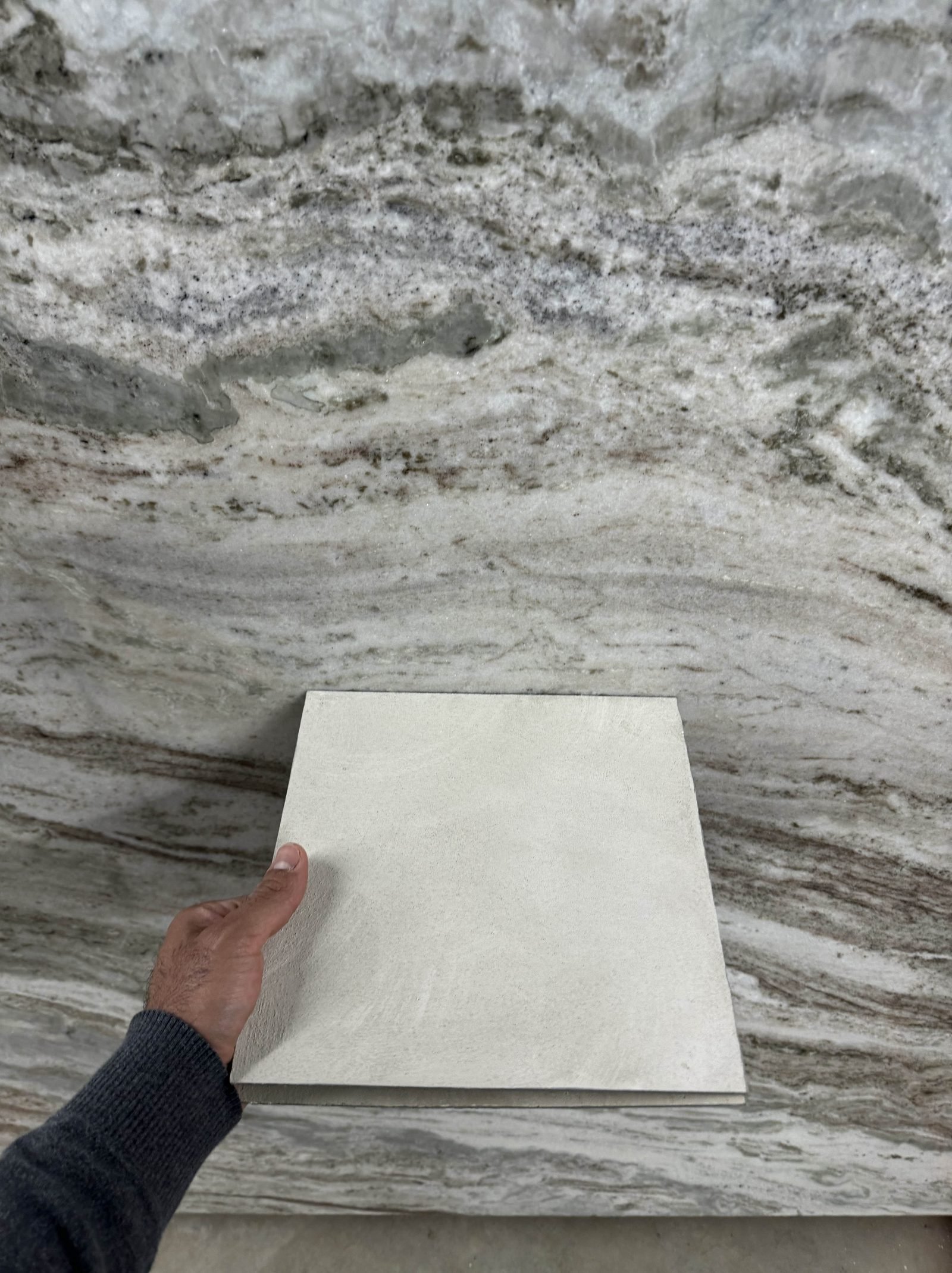
This list isn’t meant to be intimidating. It’s just what the job actually requires. Good prep is what separates a finish that lasts decades from one that looks tired in three years.
Where in your home does each finish work best?
There’s no strict rule, but there are rooms where each finish consistently performs well — both aesthetically and practically.
Venetian plaster works best in: – Living rooms and open-concept main floors where you want a statement finish – Entryways and foyers — first impressions matter, and polished spatolato or marmorino delivers – Fireplace surrounds — the heat resistance of lime plaster is a genuine advantage – Bathrooms — sealed Venetian plaster is waterproof and handles humidity well – Feature walls in dining rooms or home offices – Commercial spaces: retail, spas, hotel lobbies, restaurants
Limewash works best in: – Bedrooms — the soft, matte, organic quality is perfect for rest spaces – Accent walls where you want texture without the weight of a polished surface – Older Ottawa homes — a lot of properties in Sandy Hill, the Glebe, and Centretown have character that limewash complements naturally – Living rooms where you want warmth without high sheen – Stairwells and hallways where dramatic polish might feel heavy
One honest note on bathrooms and limewash: unsealed limewash in a shower surround or directly behind a sink is not a good idea. It can be used in bathrooms with proper sealing and in areas away from direct water contact, but it needs more protection than in a dry room.
For kitchens, polished Venetian plaster is the more practical choice — it’s easier to wipe down and holds up better to grease and steam than a matte limewash finish.
Both finishes are genuinely beautiful. The decision comes down to where you’re applying it, what the room needs, and what you want to live with.
If you’re weighing these options for a project in Ottawa and want to see both finishes in person before deciding — call me at 613-255-1512 or email Info@designerwallfinishes.com. Bring your inspiration photos, your paint chips, whatever you’ve been saving. I’ll bring the samples and we’ll put them on your actual wall in your actual light. That’s the only way to make a real decision.