
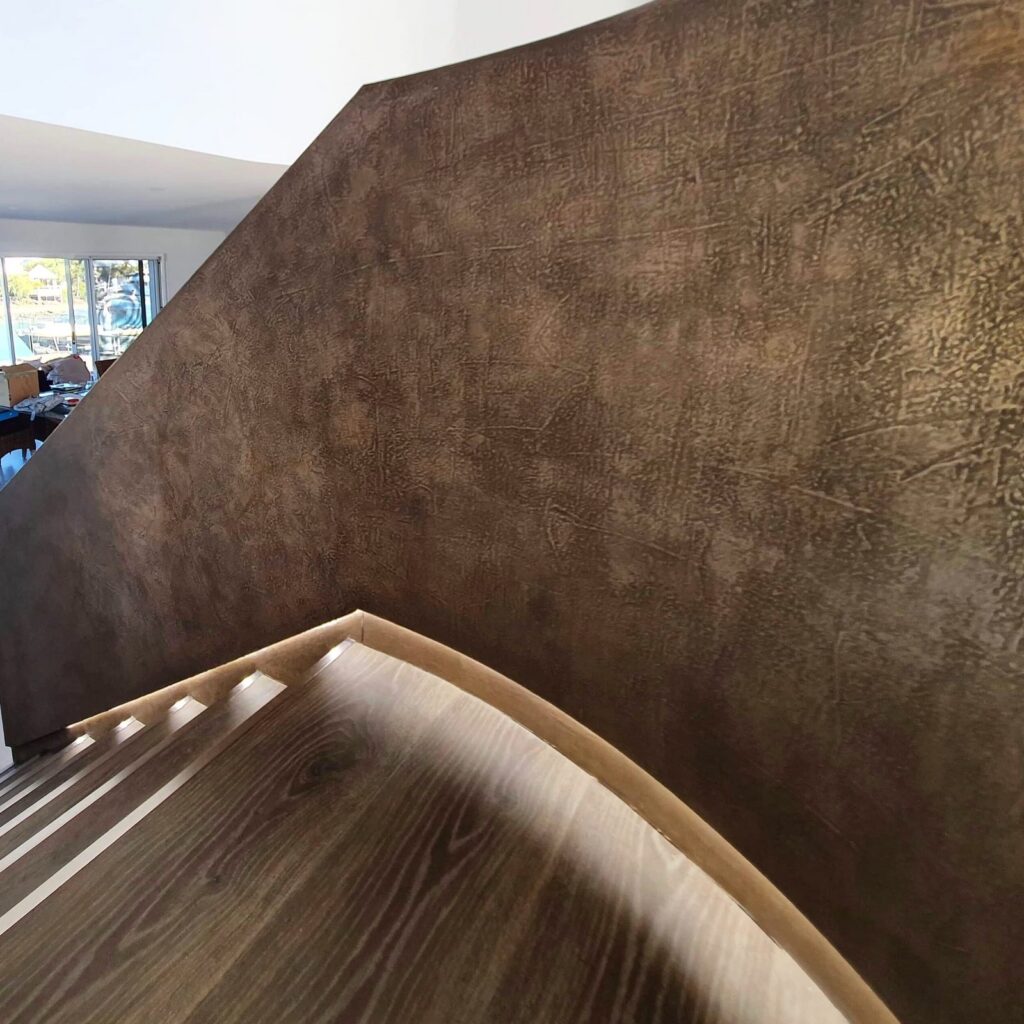
Liquid metal wall finish is a real metal wall coating — not metallic paint. It contains actual metal particles (bronze, copper, iron, aluminum, or brass) suspended in a binder, applied by hand in thin layers, and then worked with tools to expose and develop the metal’s natural character. The result looks and feels like raw, cast, or oxidized metal on your wall. It’s one of the more dramatic decorative finishes available, and when it’s done right, it genuinely reads as metal — not “shiny.”
What is a liquid metal wall finish — and how is it different from metallic paint?
Liquid metal finish contains real metal. Metallic paint contains metallic-looking pigment — usually mica flakes or synthetic shimmer particles suspended in standard latex or acrylic. That distinction matters more than most people realize, because it’s what determines whether your wall looks genuinely industrial and raw, or just reflective in a way that reads immediately as paint.
With a true liquid metal product, the metal content is high enough that you can actually oxidize, patinate, and burnish the surface after application. Apply a patination solution to an iron-based liquid metal and you’ll get real rust. Work a copper-based finish with the right acid wash and you get genuine verdigris. That reaction is chemically real — it’s happening in the metal, not on top of a coating.
Metallic paint, by contrast, gives you a one-note sheen. It can look good in the right context, but it doesn’t develop the same depth or tonal variation. When the light changes, metallic paint tends to look flat. Liquid metal shifts — darker in recesses, brighter on ridges where the trowel compressed the surface — because it has actual physical texture and real metal catching the light at different angles.
The application method is also fundamentally different. Metallic paint goes on with a roller or brush. Liquid metal is applied with a steel trowel or spatula in thin passes, built up in layers, then worked and polished by hand. That process is closer to plastering than painting.
What surfaces can liquid metal be applied to?
Liquid metal can go over most structurally sound, well-prepared interior surfaces. That includes:
- Drywall (primed and skim-coated)
- Existing plaster walls
- Concrete and masonry
- MDF and plywood (properly primed)
- Previously painted walls (if the paint is adhering solidly and the surface is flat)
The key is surface preparation. Liquid metal coatings are applied in very thin layers — typically two to four passes — so any imperfection in the substrate shows through. If the wall has cracks, uneven texture, or poor adhesion, those problems need to be fixed before any metal goes on.
I always tell people: the prep is half the job. More than half, honestly. A perfectly applied liquid metal finish over a poorly prepped wall won’t hold up, and the flaws will telegraph through the finish in a way that’s very visible on a metallic surface — because reflective materials are unforgiving.
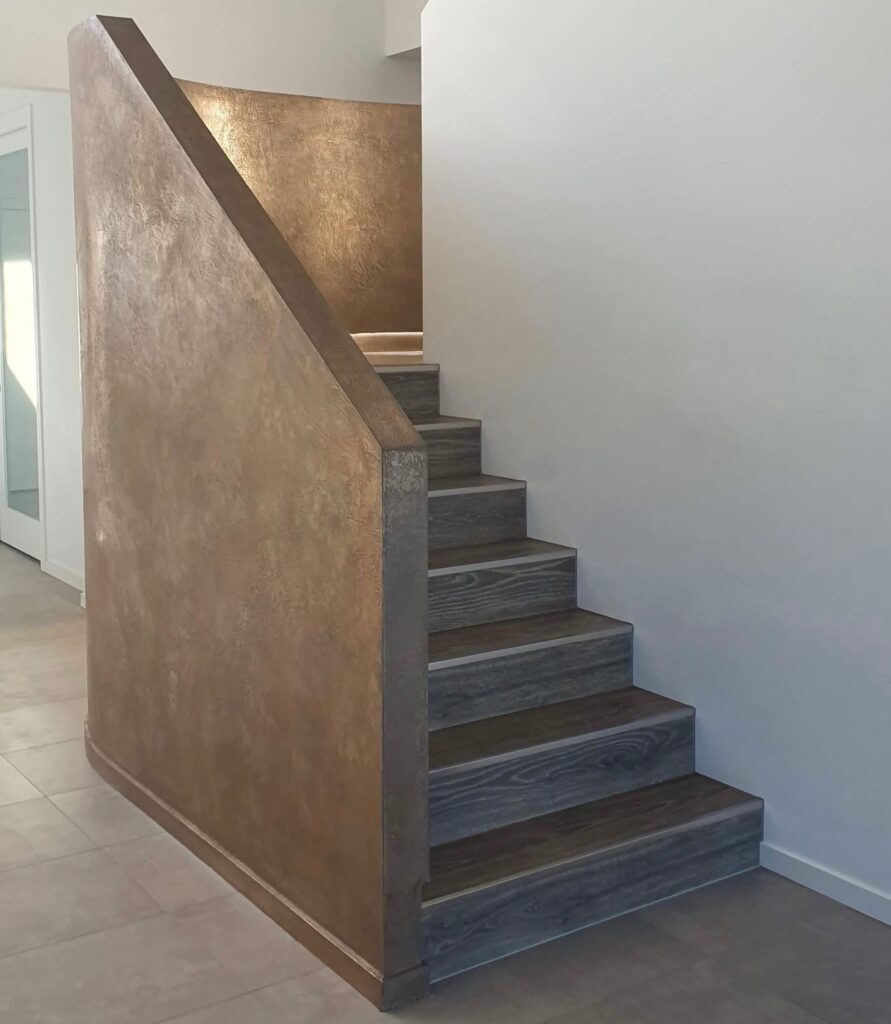
For curved surfaces, columns, and niches, liquid metal is actually a great choice. It’s flexible enough during application to follow contours that would be much harder to handle with traditional cladding or sheet metal.
Is liquid metal finish durable enough for high-traffic areas?
Yes — properly sealed, liquid metal finish is highly durable. The sealer is what makes it practical for real-world use. A good quality topcoat seals the metal particles, protects against moisture, and gives the surface abrasion resistance. Without it, metal-based finishes can oxidize unevenly or rub off in high-contact areas.
For most residential applications — accent walls, feature panels, fireplace surrounds, entry halls — a standard topcoat is sufficient. For commercial environments or surfaces that get touched constantly (bar fronts, reception desks, retail displays), I’d recommend a harder protective finish, often a matte or satin polyurethane-based sealer that doesn’t alter the metallic look but adds real surface toughness.
Bathrooms and kitchens are workable with the right sealer, but I’d be direct with anyone asking: liquid metal isn’t the first finish I’d choose for a steamy shower enclosure. Accent walls, vanity feature walls, or a kitchen backsplash in a lower-splash zone — those work well. A full wet-area application needs more conversation about the specific product and sealing approach.
One thing that’s genuinely in liquid metal’s favour for durability: if it gets nicked or scratched over time, spot repairs are possible. A skilled applicator can blend in a small repair without having to redo the whole wall, which is more than you can say for many other premium finishes.
How much does liquid metal finish cost in Ottawa?
I don’t publish per-square-foot pricing, and any applicator who gives you a flat rate without seeing the space and discussing the spec is guessing. Liquid metal finish varies significantly in cost depending on the metal type used (iron, copper, and brass products sit at different price points), the complexity of the patination or finishing work required, and the condition of the substrate going in.
What I will say is that liquid metal is a premium artisan finish. It’s priced above standard paint, above wallpaper, and in the same range as high-end decorative plasters. The labour is skilled and time-intensive. The materials — particularly quality European metal-based coating systems — are not cheap.
For Ottawa homeowners budgeting a feature wall, an honest approach is to get a consultation first, discuss the exact look you want, and price from there. The variables matter too much for a number pulled from a general range to mean anything useful.
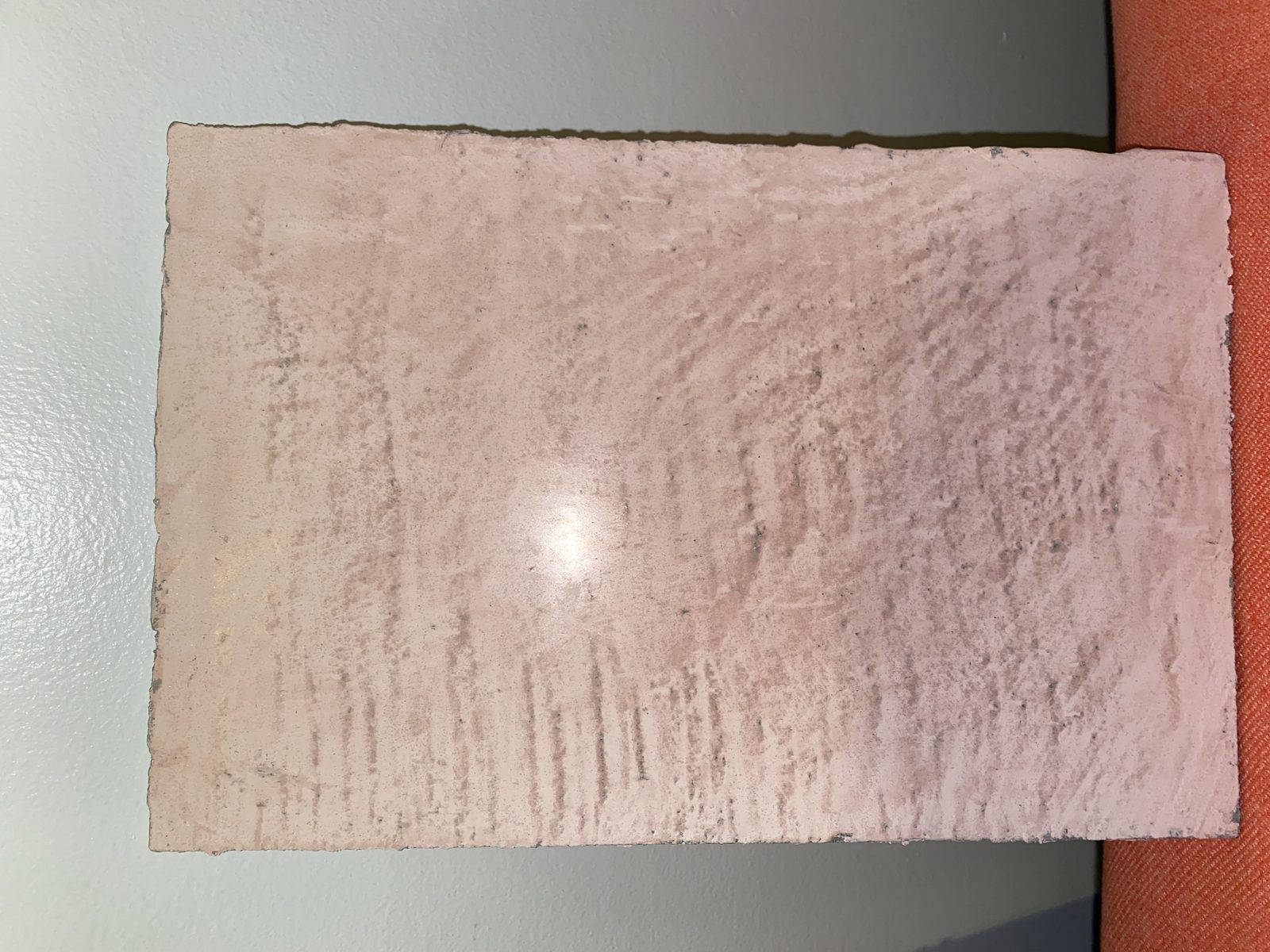
What you’re paying for with liquid metal — as with any artisan finish — is a surface that can’t be replicated by a DIY project or a general painter. The technique, the layering, the patination chemistry, the polishing — that’s craft work. In my experience, people who’ve seen a properly executed liquid metal finish in person understand the value immediately. It’s not a category you can evaluate well from a photo.
Liquid metal vs. Venetian plaster: which one is right for your space?
These are two completely different finishes in terms of material, aesthetic, and mood — but they’re often compared because both are artisan, trowel-applied, multi-layer finishes that create depth a flat coat can’t match.
Here’s how I’d break it down honestly:
Venetian plaster (stucco veneziano, marmorino, grassello di calce) is a lime-based finish. It reads as stone — warm, organic, mineral. The depth comes from translucent layers of plaster compressing and burnishing to reveal marble particles underneath. It can be polished to a glassy shine or left with a softer, matte-stone quality. It works in almost any room and pairs well with natural materials — wood, stone, linen.
Liquid metal reads as industrial material. The mood is harder, more contemporary, more architectural. It suits spaces where that rawness is intentional — an open-concept condo with concrete floors and steel fixtures, a commercial space with a modern edge, a fireplace surround where you want something dramatic and material-forward.
Say you’re deciding between a dark limewash and a liquid metal finish for an accent wall in an open-concept space. If the surrounding materials are warm and organic, limewash or a dark marmorino will feel coherent. If the space has a lot of hard edges — polished concrete, black steel, glass — liquid metal will feel like it belongs. Context matters more than personal preference alone.
A few practical differences worth knowing:
- Venetian plaster is breathable and alkaline — naturally resistant to mould. Liquid metal relies on the sealer for protection.
- Venetian plaster repairs more easily in most cases. Liquid metal repairs are very doable but require matching the specific patination, which takes skill.
- Venetian plaster has a warmer colour range by nature (lime tones, marble tones). Liquid metal can go dark and cold — aged iron, blackened bronze — in ways plaster can’t.
- Both are significantly more durable than paint when properly applied and sealed.
Neither finish is universally “better.” They’re tools for different intentions.
What to expect during the liquid metal application process
The process for a liquid metal finish typically runs across multiple days, and the timeline depends on the size of the area, the complexity of the patination, and drying time between coats.
Here’s the general sequence:
Surface preparation — Fill cracks, sand irregularities, apply primer. For drywall, a skim coat or base coat may be needed to get the wall flat enough. This step can’t be rushed.
Base coat application — A bonding primer or specialty base coat goes on first to give the metal product something to grip. Product compatibility here matters — the base has to match the specific liquid metal system being used.
First metal coat — Applied with a steel trowel or spatula, worked thinly and evenly. This first pass establishes the base layer. It dries to a dull, flat metal colour.
Second and third coats — Each subsequent coat adds depth. The applicator works the layers to build up variation — lighter in some areas, heavier in others — which is what creates the three-dimensional quality that distinguishes this from paint.
Patination (if applicable) — For iron or copper-based finishes, a patination solution can be applied at this stage to develop oxidation, rust, or verdigris effects. This is where the finish really comes alive. The timing and concentration of the patination determines the character of the result.
Burnishing and polishing — Depending on the desired look, the surface may be burnished to bring out metallic brightness, or left with more texture and matte depth.
Sealing — A topcoat is applied to lock everything in and provide the durability the surface needs for daily use. Sheen level (matte, satin, semi-gloss) is chosen based on the aesthetic goal and the practical demands of the space.
The whole process is hands-on at every stage. There’s no spray-and-walk-away shortcut that produces a real liquid metal result. The finish develops through the work — and that’s what makes it look like what it’s supposed to look like.
If you’re looking at liquid metal finish for a wall in Ottawa and want to see what the real material looks like in person — not on a screen — call me at 613-255-1512 or email Info@designerwallfinishes.com. I bring samples. You can hold them, see how they move in different light, and compare them side by side with other finishes. That’s the only honest way to make this decision. A screen can’t show you what metal actually does on a wall.