
Which decorative wall finish actually holds up in a busy commercial space — and which ones look great on day one but start failing within a year? The short answer: lime-based finishes and microcement consistently outperform paint and wallcoverings in commercial environments. But the right choice depends on what kind of space you’re finishing, how much traffic it takes, and what kind of maintenance you’re willing to commit to long-term.
What decorative wall finishes work best in commercial spaces?
For commercial applications, the finishes that consistently perform are Venetian plaster (stucco veneziano, marmorino, grassello di calce), microcement, limewash, and liquid metal. These aren’t just decorative — they’re architectural coatings that bond to the substrate and hold their integrity under real-world conditions.
Paint is the baseline. It’s cheap to install and easy to understand, but in a commercial space it chips, scuffs, and fades. You’re repainting every two to three years in most high-traffic environments. Decorative plaster and microcement cost more upfront, but a properly applied finish can last decades without the same maintenance cycle.
Here’s how the main options break down for commercial use:
– Venetian plaster / stucco veneziano — polished, high-end, works beautifully on feature walls, reception areas, and dining rooms. Hard, durable surface when properly sealed. – Marmorino — a coarser-ground lime plaster that takes a cooler, more textured polish. Great for large commercial surfaces where you want depth without a mirror finish. – Microcement (microcemento) — ultra-thin cementitious coating applied in multiple layers. Seamless, waterproof when sealed, handles heavy wear. My go-to for floors, counters, and wet commercial zones. – Limewash — matte, breathable, deeply textural. Outstanding visual character for restaurants, boutique retail, and hospitality. Less suited to constant contact zones unless sealed appropriately. – Liquid metal — iron, copper, or bronze-look finishes applied in layers and oxidized or patinated. Striking in lobbies and feature installations.
How durable are decorative finishes in high-traffic commercial environments?
Genuinely durable — when they’re applied correctly and sealed for the application. That’s the qualifier that matters most.
Venetian plaster, once burnished and sealed, is harder than drywall compound. It doesn’t dent from incidental contact the way a standard painted wall does. Marmorino and grassello di calce finishes compress the lime particles during burnishing, creating a surface that’s denser than what most people expect from plaster. Microcement, properly sealed with a commercial-grade topcoat, resists abrasion, moisture, and cleaning chemicals.
Where decorative finishes fail in commercial settings, it’s almost always a prep or spec problem — wrong product for the environment, inadequate sealing, or substrate issues that weren’t addressed before application. A limewash finish without the right sealant in a kitchen corridor is going to suffer. A fully sealed marmorino on a hotel lobby wall? That’s a twenty-year surface.
I always tell commercial clients: the finish itself isn’t the risk. The risk is cutting corners on surface prep or choosing a finish that isn’t matched to the specific demands of the space.
Is Venetian plaster a good choice for restaurants, hotels, and retail stores?
Yes — and in my experience, it’s one of the best finishes available for hospitality and upscale retail specifically. Venetian plaster photographs beautifully, holds its look for years without repainting, and brings a material richness that paint simply can’t replicate.
For restaurants, the relevant concerns are humidity, steam, grease proximity, and cleaning frequency. Here’s the reality: properly sealed stucco veneziano handles humidity well. Lime is naturally breathable, which means it manages moisture vapor without trapping it behind the surface and causing delamination. In areas with direct splash or grease exposure — near an open kitchen pass, for example — I’d specify a sealed marmorino or recommend microcement over Venetian plaster, because those surfaces need to be wipeable without worrying about finish degradation.
For hotels, Venetian plaster in lobbies, corridors, and feature walls is almost a standard spec at the upper end of the market now. The depth and variation you get from a hand-applied grassello di calce finish — that subtle translucency across layers — is something no wallcovering or paint technique genuinely replicates. It reads as quality, immediately, to guests.
For retail, it depends on the brand positioning. Boutique fashion, luxury goods, wellness and spa — limewash and Venetian plaster are consistently popular because they signal a material standard that aligns with premium product. A big-box retail environment doesn’t need this; a concept store in Westboro absolutely does.
Venetian Plaster vs. Limewash vs. Microcement: Which is right for your commercial project?
These three finishes come up in almost every commercial conversation I have. They’re not interchangeable — each has a specific performance profile and visual language.
Venetian Plaster (stucco veneziano / marmorino / grassello) – Finish: polished satin to high gloss, deep marble-like translucency – Durability: very high when sealed; harder than standard plaster – Best for: reception areas, dining rooms, hotel lobbies, feature walls, spa interiors – Moisture: handles ambient humidity well; not for direct wet zones without specific sealing – Maintenance: low — wipe with a damp cloth, avoid abrasive cleaners
Limewash – Finish: matte, chalky, layered — dries to a cloudy, soft depth – Durability: moderate; breathable and naturally antimicrobial, but softer surface than polished plaster – Best for: restaurants, wine bars, boutique retail, anywhere the aged/textured aesthetic fits the brand – Moisture: breathable, manages vapor well, but not suited to heavy splash zones unsealed – Maintenance: gentle cleaning; some limewash products can be touched up easily if marked
Microcement (microcemento) – Finish: seamless, matte to satin, contemporary industrial or minimal aesthetic – Durability: extremely high — resists abrasion, impact, and moisture when properly sealed – Best for: commercial bathrooms, bar fronts, kitchen surrounds, flooring, counters, any wet or high-contact zone – Moisture: waterproof when sealed with the right topcoat – Maintenance: wipe clean with non-abrasive cleaners; periodic resealing depending on traffic level
If you’re finishing a dining room with character and the brand story matters — I’d look at limewash or polished Venetian plaster. If you’re finishing a commercial bathroom, bar back, or any surface that gets wet, touched, and cleaned constantly — microcement is the right call. Liquid metal finishes work best as accent applications: a feature column, a reception desk panel, a fireplace surround.
What does the installation process look like for a commercial decorative finish?
The process is the same whether it’s a residential bathroom or a commercial restaurant — just scaled up, with tighter timelines and more coordination with other trades.
Here’s how a typical commercial installation runs:
1. Consultation and colour development Before anything touches the wall, we talk through the space, the brand, the lighting conditions, and what the finish needs to do. I develop custom colour samples matched to the project. For commercial work, this step matters more than most people realize — what looks right on a small chip can read very differently across sixty square meters of wall under commercial lighting.
2. Surface preparation This is where most decorative finish problems start. Every surface has to be clean, structurally sound, and properly primed before any plaster or microcement goes on. Existing paint that’s flaking, drywall that’s been moisture-damaged, substrate movement — all of it has to be addressed before application. In commercial renovations, this often means dealing with walls that have years of paint layers or old finishes that need proper stripping.
3. Multi-layer hand application Venetian plaster goes on in thin layers with a steel trowel, each one allowed to dry partially before the next. Marmorino typically involves two to three layers. Limewash is applied in overlapping, varied passes to build the characteristic depth and variation. Microcement goes on in multiple thin coats — primer, base coats, finish coat. Each layer has to cure properly before the next one goes down.
4. Burnishing and sealing For polished Venetian plaster, burnishing is where the marble particles compact and the surface develops its characteristic sheen — from soft satin to near-mirror depending on the spec. Sealing is the final step and the one that determines performance in commercial environments. The right sealer for a restaurant wall is different from the right sealer for a lobby wall. I match the sealer to the specific demands of each zone.
Prep checklist before installing decorative finishes in a commercial space
Surface prep in a commercial project is rarely as clean as a new residential build. Here’s what needs to happen before any decorative finish goes on:
– Assess existing substrate — concrete, drywall, or existing plaster all have different prep requirements – Repair cracks, holes, and damaged sections — decorative finishes show substrate imperfections – Address any moisture infiltration at the source — do not apply lime or cement coatings over active moisture – Strip or sand failing paint — loose layers will cause the new finish to delaminate – Apply the correct primer or bonding agent for the specified finish (varies by product) – Protect adjacent surfaces, flooring, and millwork — especially important in operating commercial spaces – Coordinate timing with other trades — decorative finishes need protected cure time; foot traffic, HVAC dust, and painting in adjacent areas all need to be scheduled around the application – Confirm lighting installation is complete or close to it — lighting affects colour approval
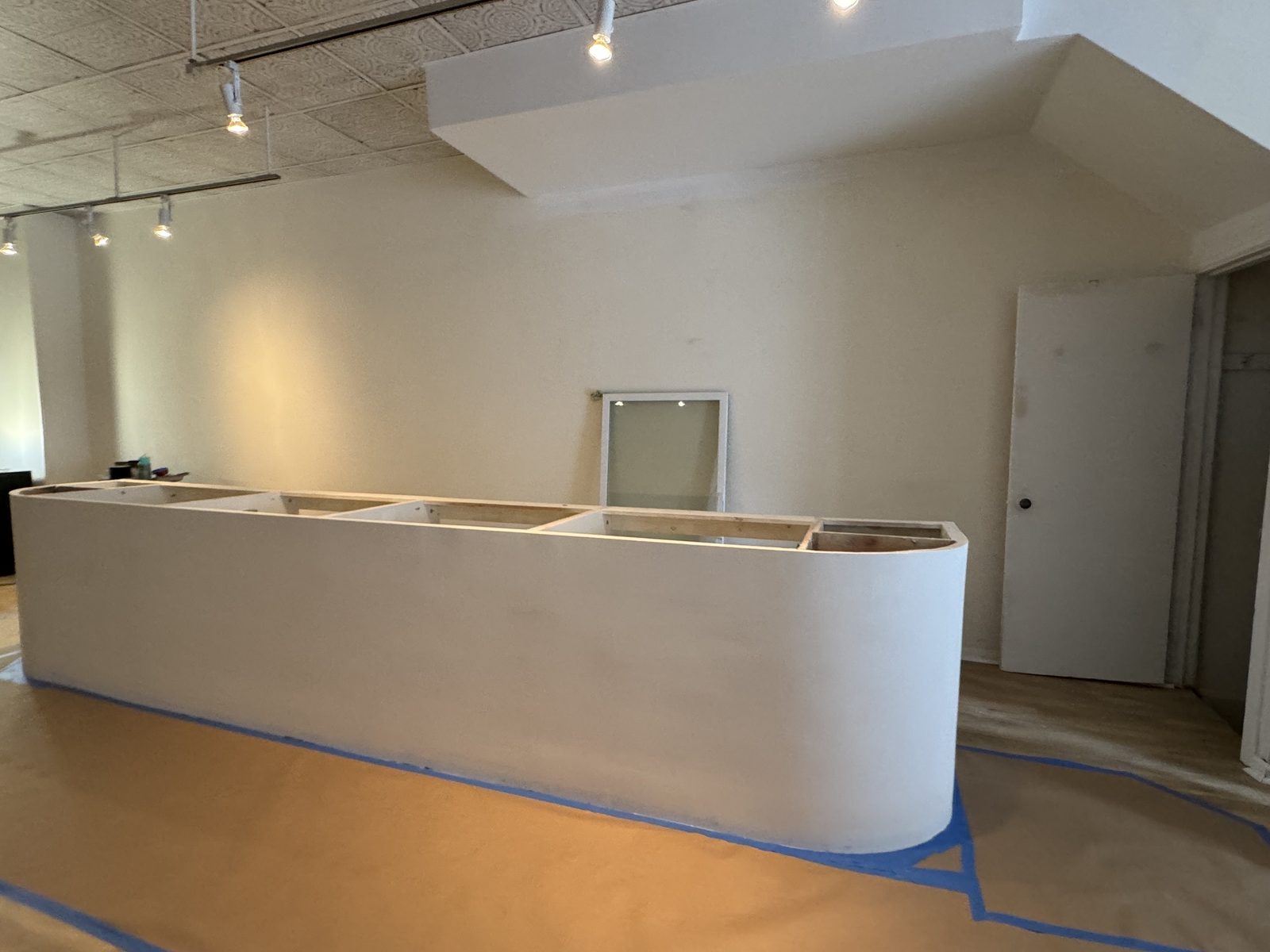
In older Ottawa commercial buildings — especially heritage properties in the Glebe, ByWard Market, or Sandy Hill — you often encounter brick substrate, uneven plaster, or prior water damage. Each of those requires specific remediation before a decorative finish can be specified and applied. I won’t apply a premium finish over a substrate that isn’t ready. That’s a standard I hold on every project.
How do you maintain and clean decorative wall finishes in commercial settings?
Maintenance is straightforward if the finish was properly specified and sealed for its environment. The problems come when cleaning staff use the wrong products — specifically anything abrasive or strongly alkaline on lime-based finishes.
For Venetian plaster and marmorino: Wipe with a soft, lightly damp cloth. Avoid abrasive pads, scouring powders, and strongly acidic or alkaline cleaners. A mild pH-neutral cleaner works for most commercial cleaning needs. Sealed polished plaster is resistant to light marks and fingerprints. If a section gets damaged, a skilled plasterer can patch and blend it — lime-based finishes are repairable in a way that paint-over finishes aren’t.
For limewash: Gentle is the word. Soft cloth, lightly damp, minimal product. The good news is that limewash surfaces often look better with very minor marks and variation — that’s part of the aesthetic. Some limewash products allow for easy touch-up application if a section gets marked significantly.
For microcement: Sealed microcement is the most maintenance-friendly of the commercial finishes. Wipe with a damp cloth or mop. Non-abrasive pH-neutral cleaners are fine. The main maintenance task over time is monitoring the seal — in very high-traffic commercial floors or counters, a topcoat refresh may be appropriate every few years depending on wear. That’s still a far lighter maintenance burden than replacing damaged tile or repainting walls.
General rules for commercial settings: – Brief cleaning staff on the correct products before the space opens — this prevents most maintenance issues – Avoid steam cleaning directly on Venetian plaster surfaces – Don’t use wax-based products on sealed microcement — they interfere with the topcoat – For any significant damage, call the applicator — attempting a DIY repair on a decorative plaster finish usually creates a more visible problem than the original damage
The durability of these finishes in commercial environments is one of the strongest arguments for the investment. Properly applied and maintained, a Venetian plaster or microcement finish outlasts multiple repaint cycles and retains its visual impact without the disruption of ongoing renovation.
Ready to spec the right finish for your commercial space?
If you’re working through finish selections for a restaurant, retail space, hotel, or commercial interior in Ottawa, I’d rather show you material samples in person than try to describe them from a screen. The depth of a polished marmorino or the texture of a layered limewash — those things need to be seen and felt to make a real decision.
Call me at 613-255-1512 or email Info@designerwallfinishes.com. Bring your drawings, your brand references, your mood board screenshots — I’ll bring the samples and we’ll work through what actually makes sense for your space, your traffic levels, and your maintenance reality. That’s how you make a finish decision you won’t regret five years from now.