
A Dated Tile Ensuite, Refinished in Microcement Without Tearing Out a Single Tile
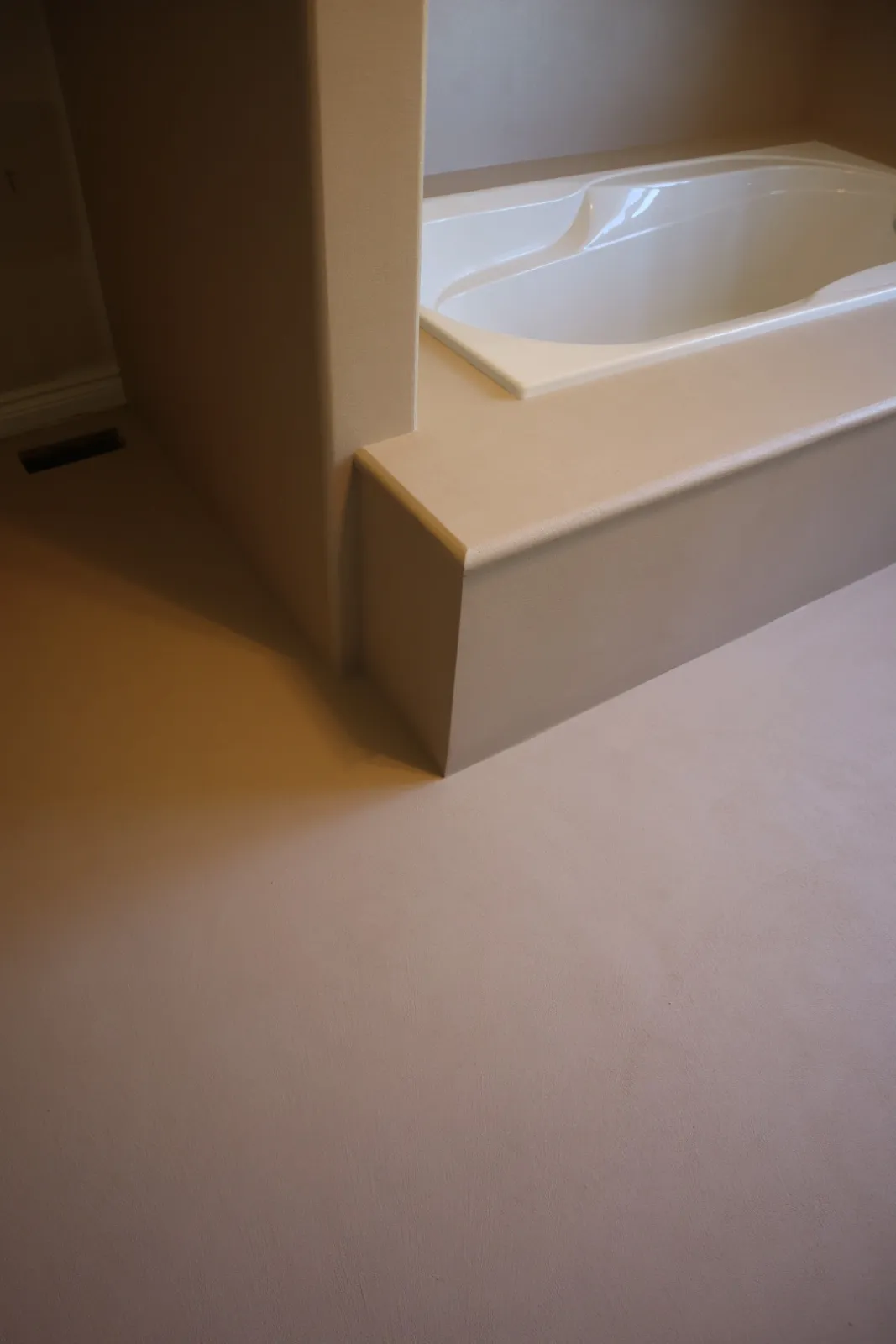
This master ensuite in the Kanata and Stittsville area had the bathroom most Ottawa homes built in the 2000s still have: mottled beige floor tile, a tiled tub deck with decorative inserts and a bullnose edge, and grout lines everywhere. The owners were replacing the vanity and wanted the whole room to feel calm and current. Instead of demolition, we covered the floor, the tub deck, the tub apron and the surround band in one continuous hand-troweled microcement.
Project Snapshot
| Location | Kanata / Stittsville, Ottawa |
|---|---|
| Room | Master ensuite |
| Existing surface | Glazed ceramic floor tile, tiled drop-in tub deck and apron with bullnose edge |
| Finish | Hand-troweled microcement in a warm greige, sealed for a wet room |
| Surfaces finished | Full floor, tub deck, tub apron and edge, tub surround band |
| Demolition | None. The tile stayed where it was. |
| Applicator | Venetian Plaster & Limewash Ottawa (a Designer Wall Finishes studio) |
Why Not Just Retile?
Retiling a bathroom this size means ripping up the floor, breaking out the tub deck, hauling bins of tile and mortar down the stairs, and then waiting on a tiler. The tub itself was in good shape. So was the tile underneath: flat, well bonded and not cracked. That makes it a perfect substrate for microcement, which goes on a few millimetres thick and bonds directly over sound tile.
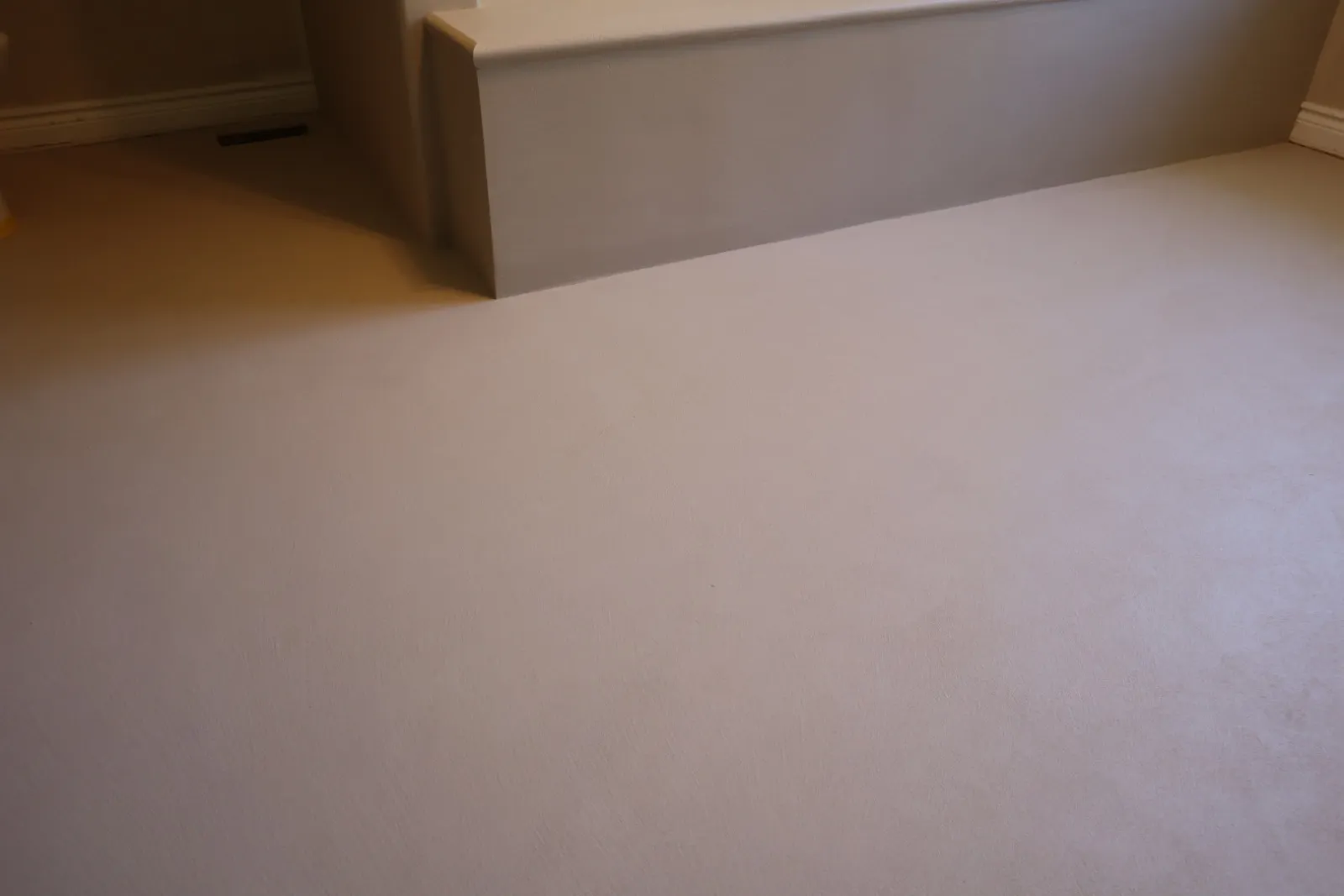
The owners also wanted fewer lines in the room, not new ones. Large-format porcelain would still have grout joints. Microcement has none. The floor, the tub deck and the face of the tub box now read as one piece of material, which is what makes a room this size feel bigger and quieter.
How We Did It
Prep is the whole job
Microcement over tile only works if the tile is clean, solid and flat. We checked every tile for hollow spots, degreased the whole surface, and filled the grout lines so they would not ghost through the finish later. The access opening in the tub apron and the transition at the door were planned before the first coat, so every edge had a clean stopping point.
Reinforce, then build it up in thin coats
A reinforcing mesh goes into the base coats over the tile so the finish moves with the floor instead of cracking along old joints. From there the microcement is built up by hand in thin layers, with sanding between coats. The final coats are troweled for a soft, stone-like movement: you can see the hand in it when the light rakes across the floor, but from the doorway it reads as calm and even.
Shaping the tub deck
The old tub deck had a tile bullnose and decorative insert tiles on the apron. We wrapped the deck and apron as one piece and hand-shaped the edge into a soft rounded nose, so the corner where the deck meets the half wall is crisp and the step down to the floor flows without a seam. The band of surround behind the tub was finished in the same colour, which ties the wet zone together.
Sealed for a bathroom
The finish is closed with multiple coats of a protective sealer rated for wet areas. Water beads, soap and toothpaste wipe off, and the floor is comfortable underfoot with just enough grip.
The Palette
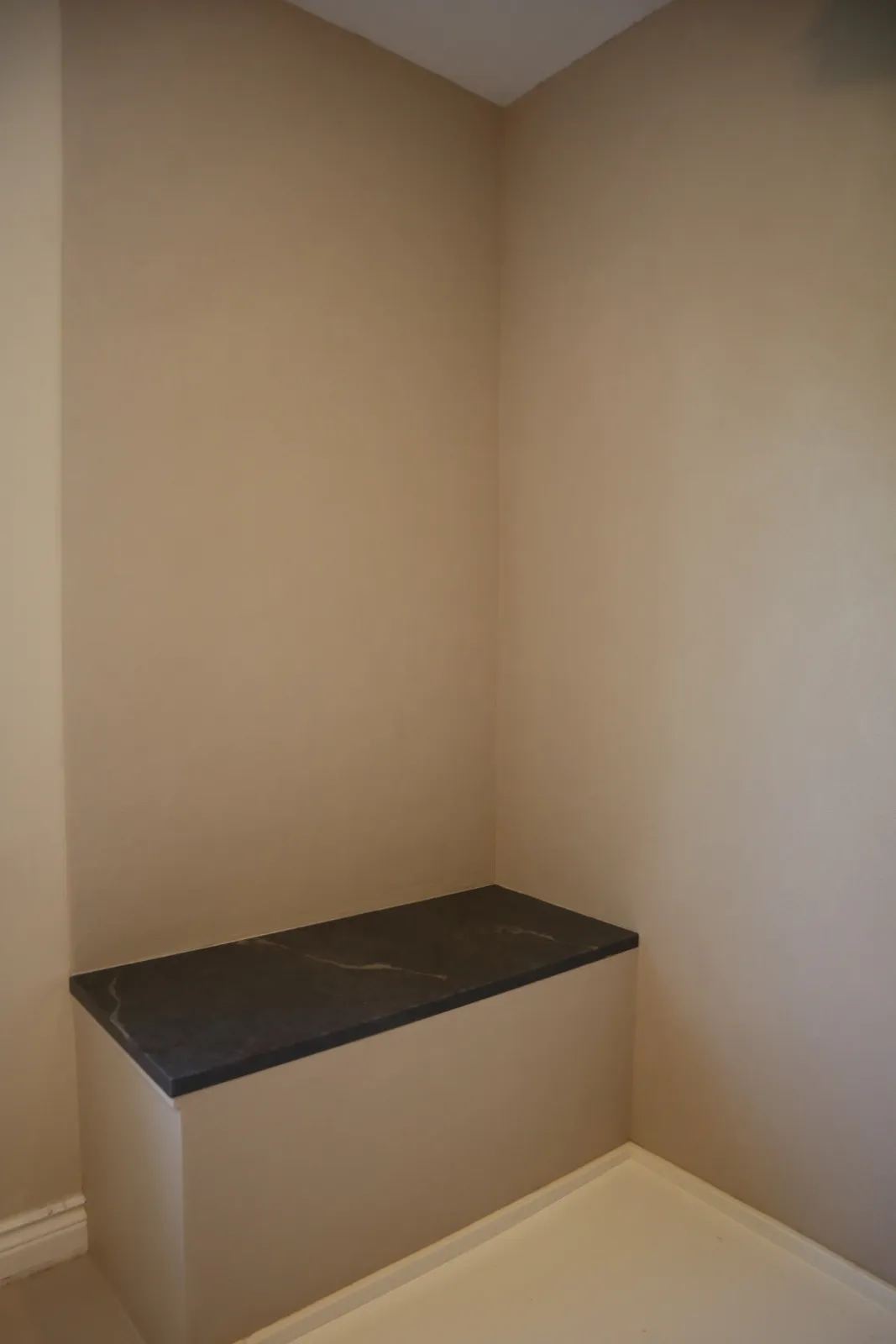
The owners chose a new oak-look vanity with a dark veined stone top. We kept the microcement in a warm greige that sits between the wood and the stone, a touch lighter on the floor so the room stays bright, and slightly warmer on the tub box so it reads as a built-in piece of furniture. A neutral with warmth in it, rather than a cool grey, also leaves the owners free to take the upper walls almost any direction later.
Before and After
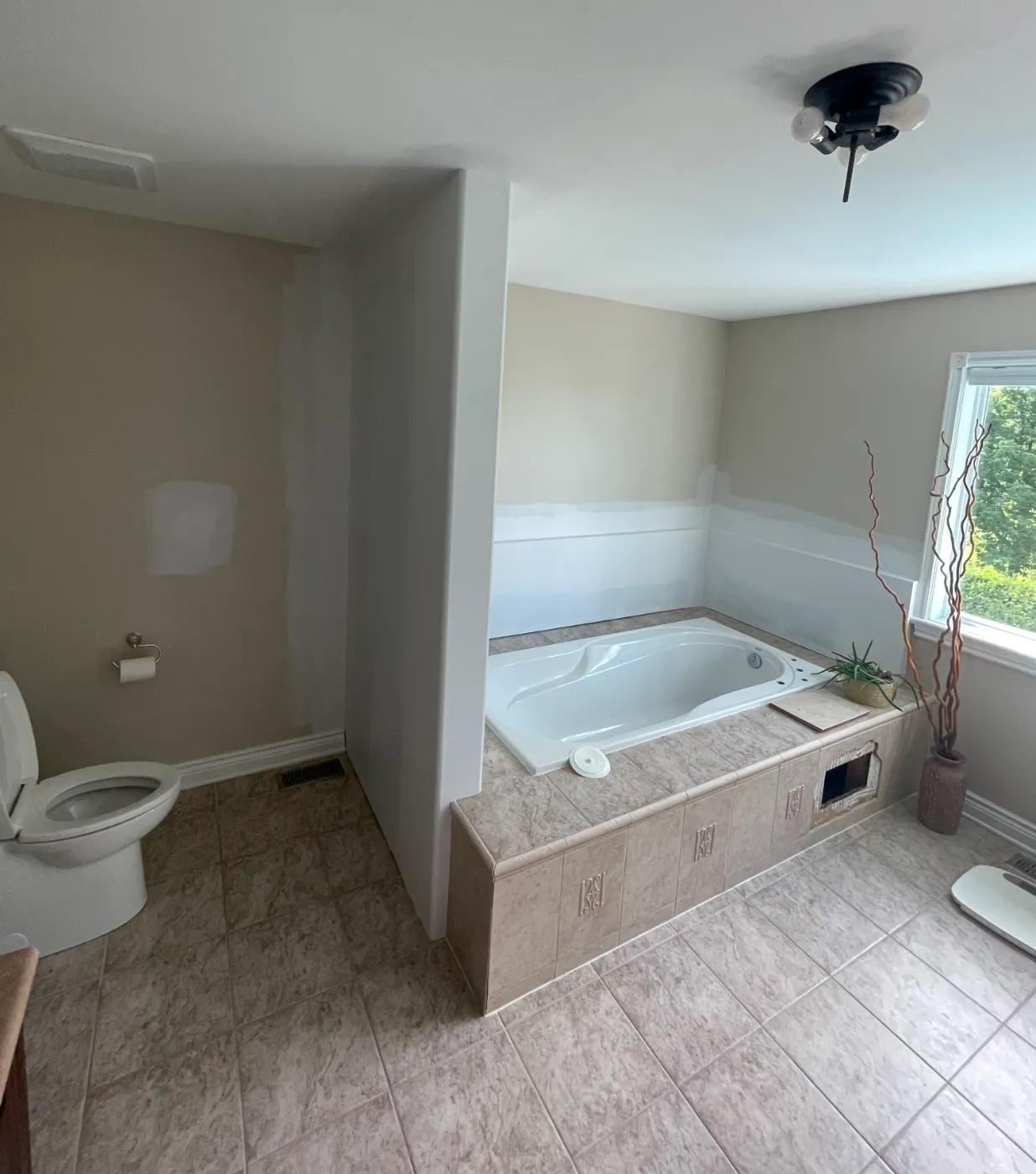
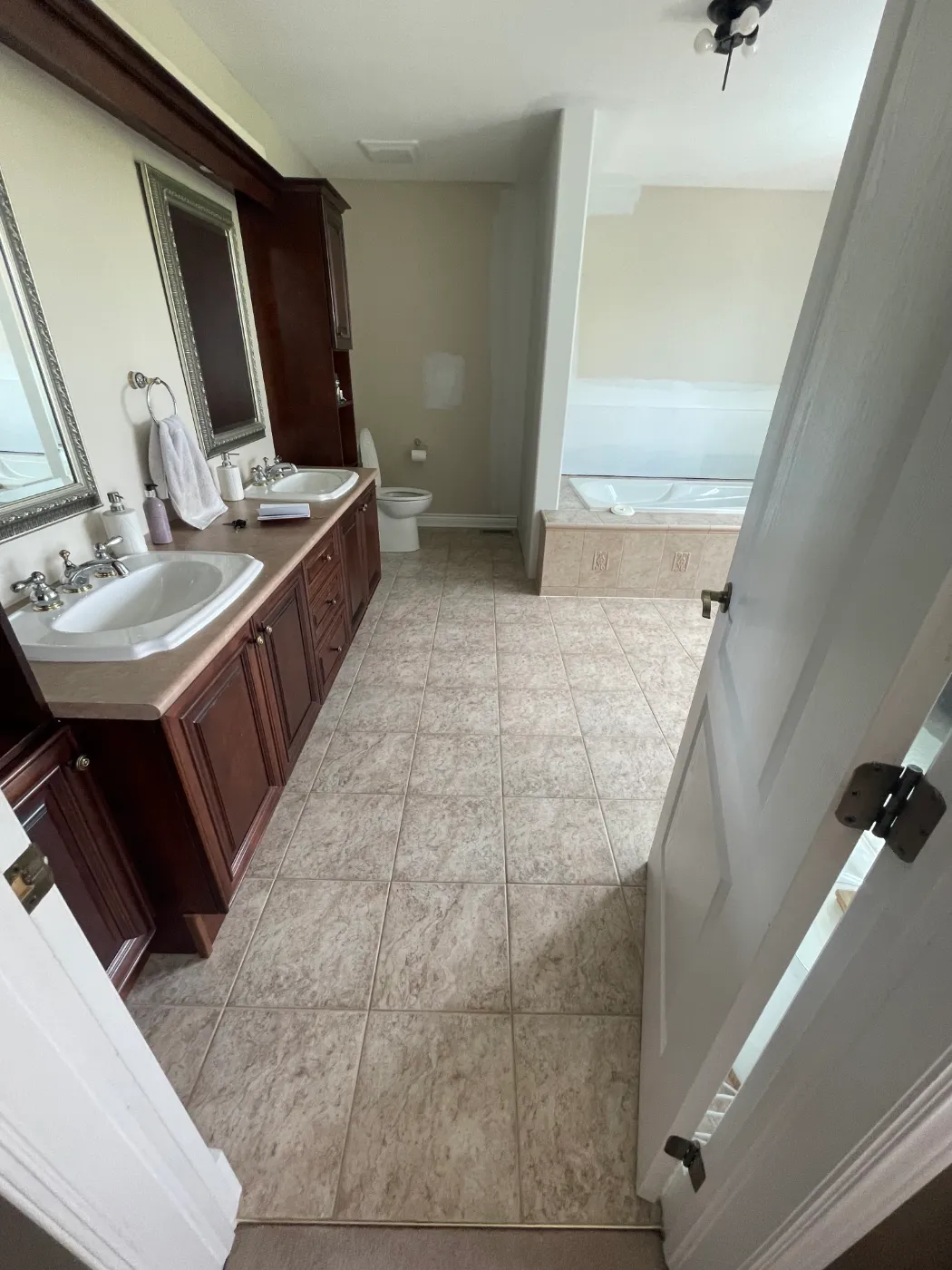
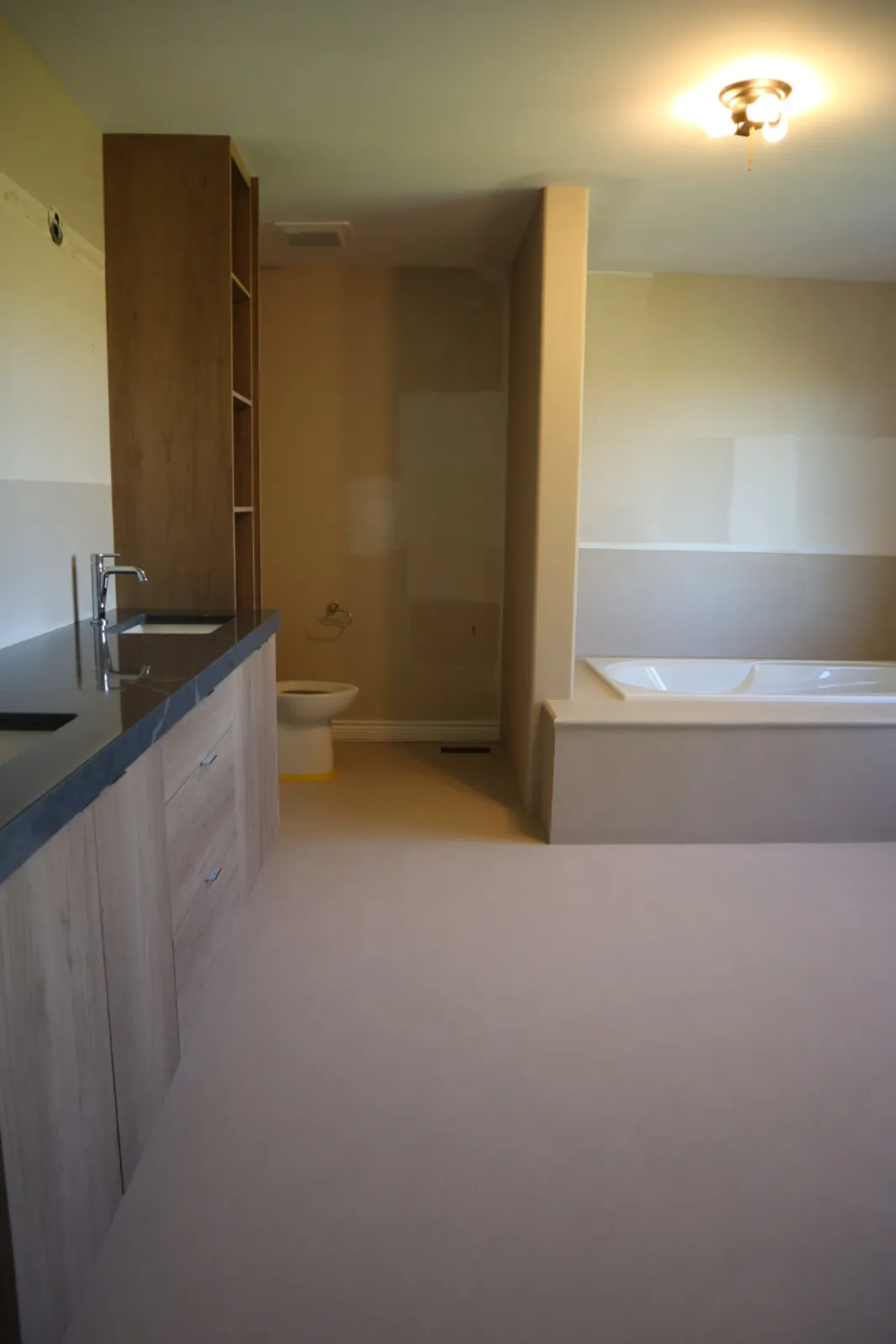
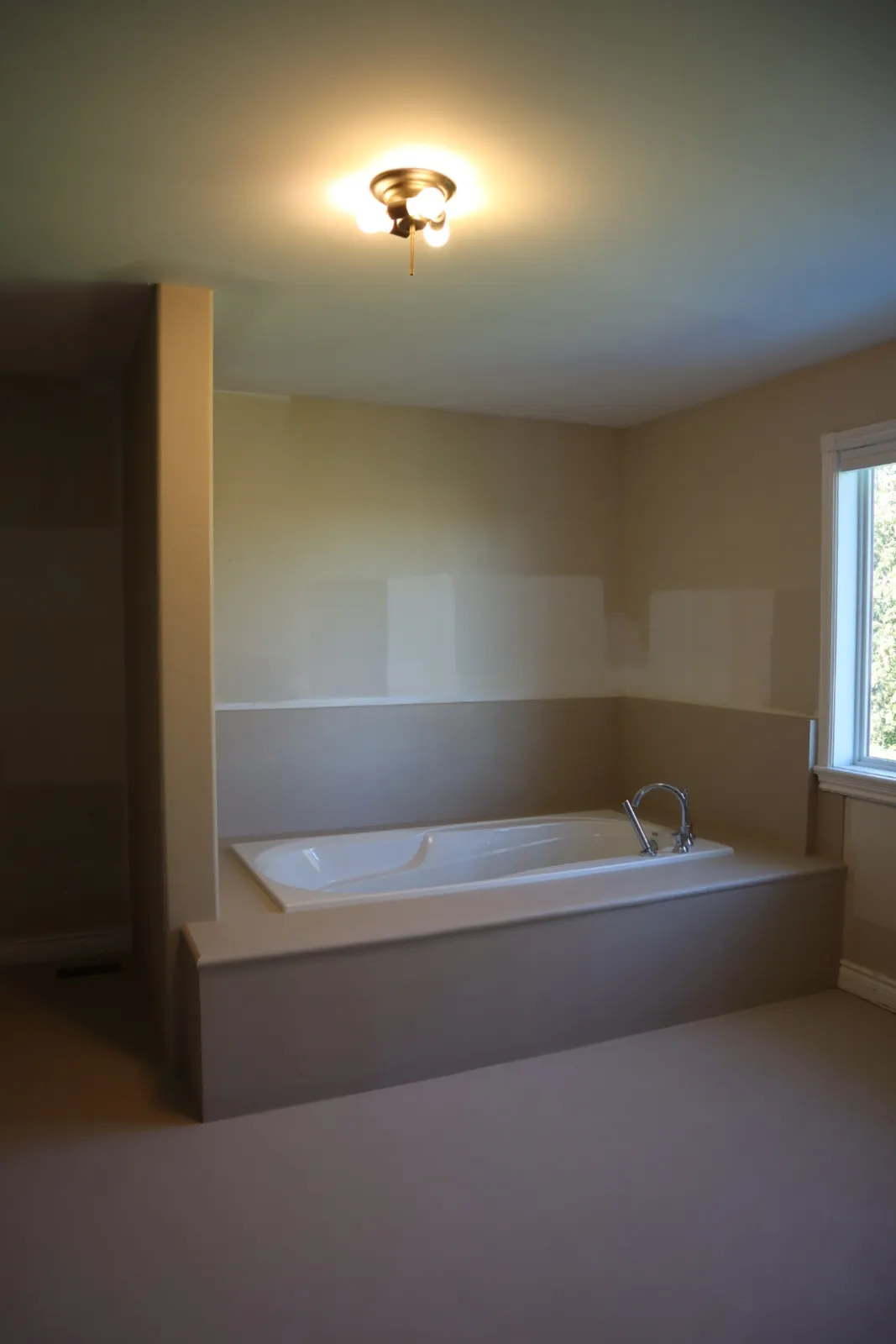
Is Your Bathroom a Candidate for Microcement Over Tile?
- Yes, if the tile is well bonded, not cracked through, and the floor does not flex when you walk on it.
- Yes, if you want to keep your tub, toilet flange and door heights, since the finish adds only a few millimetres.
- Talk to us first if tiles sound hollow when tapped, there is movement in the subfloor, or there has been a leak. Those get fixed before any finish goes on.
- Great fit for tub decks, vanity tops, shower curbs, benches and floors, because one material can wrap them all.
Frequently Asked Questions
Can microcement really go directly over bathroom tile?
Yes, as long as the tile is sound. We inspect for hollow or loose tiles, clean and fill the grout lines, and reinforce the base coats with mesh so the old joints do not telegraph through. That is how this Kanata area ensuite was done, with no tile removed.
How thick is microcement over tile?
A few millimetres in total. Doors, baseboards and the toilet usually stay where they are, which is one of the biggest savings compared with a full retile.
Is microcement slippery on a bathroom floor?
It is sealed with a matte finish that has a natural texture from the trowel, so it is not glassy like polished porcelain. Like any bathroom floor, a bath mat by the tub is still a good idea.
How do I clean it?
Warm water and a pH-neutral cleaner. Skip bleach, abrasive powders and acidic descalers. That is all the maintenance it needs day to day.
Do you do microcement bathrooms across Ottawa?
Yes. Kanata, Stittsville, Barrhaven, Orleans, Nepean and the core, plus towns within driving distance. Every job starts with a site visit and a sample in your chosen colour.
Tired of Your Bathroom Tile?
Keep the tub, skip the demolition, and lose the grout lines. Send us a few photos of your bathroom at Info@designerwallfinishes.com or call 613-255-1512 and we will tell you honestly whether your tile can take microcement.